Let me try to think of something other than Facebook...
..still thinking..
Oh I know - youtube! :)
Be it a joke or not, for many these are the only things they use internet for. Since I'm into photography and design, I visit a lot of forums and blogs that are related to those topics.
One of my favorites is Dizajn Zona (design zone), a Serbian forum about design where people post their work and then get opinions on it from their coleagues and professionals. It I also a good place to find ideas for your work.
In my favorites bar can also be found websites of the promoting companies for Chicago nightlife (since I work for some of them, and I always love to check what the photos i took for them look like).
Farther than that, not really any other websites that I regularly visit. Facebook is definitely taking over everything that used to be popular on the net. Today it's better to have a page on Facebook then your personal website!
Saturday, April 24, 2010

Do your zodiac sign traits describe your personality?
*
A typical Capricorn has good organizational skills, is neat and tidy, have hardheaded practicality. You have strong work ethic, materialistic tendencies, a conservative streak, conventionality and great respect for authority. You are ambitious, serious and dedicated to duty. You are self-disciplined, responsible and practical but at times, you can wallow in self-pity. Your reasoning ability is excellent and has strong sense of purpose and direction.
A Capricorn may appear somber and reserved in their dealings with others, but once they give the trust, they are a loyal and steadfast friend. Socially oriented, you are willing to work hard for anything you want, and your self-esteem is extremely important to you. You are bright and quick. You are good in detail as well as in insight and conceptual formulation. You are materialistic rather than philosophical. You are capable of falling in love for its own pleasure but love alone will not motivate you to marriage. To you marriage serves a social design.
*
Wow I'm totally awesome, right?
I can find myself in all of this, I do I maybe just want to find myself in all of this?
If there is anything in the world that I really don't believe in, that is zodiac/horoscope. Ok well I don't believe in dragons either.
But come on, every single person can describe himself with at least one of these traits. Zodiac traits are so broad that, by looking strictly straight ahead, we think that these are written exactly for us.
Two of my best friends are Capricorns. You wouldn't believe what opposites we are. People probably wonder why we are even friends since we are so different. and yet, I am sure that if they looked at this list, thay would also say "yup, that's me".
Let's see what i think about it:
organizational skills - hm well I guess, I'm definitely trying to get better in organizing my life
neat and tidy - lol I wish! actually, my mom wishes! :D
You are ambitious, serious and dedicated to duty - ok this is totally me. Ambition is my second name :)
Your reasoning ability is excellent and has strong sense of purpose and direction - this is one of those things where everyone finds themselves, everybody likes having strong reasoning ability, right?
You are capable of falling in love for its own pleasure but love alone will not motivate you to marriage. To you marriage serves a social design. - I am not really sure what they are trying to tell me here.
My point is that, if I read the zodiac traits for Aries, I would probably find as many things that describe me as here.
Conclusion: I don't believe in it.
A typical Capricorn has good organizational skills, is neat and tidy, have hardheaded practicality. You have strong work ethic, materialistic tendencies, a conservative streak, conventionality and great respect for authority. You are ambitious, serious and dedicated to duty. You are self-disciplined, responsible and practical but at times, you can wallow in self-pity. Your reasoning ability is excellent and has strong sense of purpose and direction.
A Capricorn may appear somber and reserved in their dealings with others, but once they give the trust, they are a loyal and steadfast friend. Socially oriented, you are willing to work hard for anything you want, and your self-esteem is extremely important to you. You are bright and quick. You are good in detail as well as in insight and conceptual formulation. You are materialistic rather than philosophical. You are capable of falling in love for its own pleasure but love alone will not motivate you to marriage. To you marriage serves a social design.
*
Wow I'm totally awesome, right?
I can find myself in all of this, I do I maybe just want to find myself in all of this?
If there is anything in the world that I really don't believe in, that is zodiac/horoscope. Ok well I don't believe in dragons either.
But come on, every single person can describe himself with at least one of these traits. Zodiac traits are so broad that, by looking strictly straight ahead, we think that these are written exactly for us.
Two of my best friends are Capricorns. You wouldn't believe what opposites we are. People probably wonder why we are even friends since we are so different. and yet, I am sure that if they looked at this list, thay would also say "yup, that's me".
Let's see what i think about it:
organizational skills - hm well I guess, I'm definitely trying to get better in organizing my life
neat and tidy - lol I wish! actually, my mom wishes! :D
You are ambitious, serious and dedicated to duty - ok this is totally me. Ambition is my second name :)
Your reasoning ability is excellent and has strong sense of purpose and direction - this is one of those things where everyone finds themselves, everybody likes having strong reasoning ability, right?
You are capable of falling in love for its own pleasure but love alone will not motivate you to marriage. To you marriage serves a social design. - I am not really sure what they are trying to tell me here.
My point is that, if I read the zodiac traits for Aries, I would probably find as many things that describe me as here.
Conclusion: I don't believe in it.
Sunday, April 11, 2010
Something that caused me to drastically change my thinking
It took me a day to decide if I was going to come to United States or not. Twenty days after that decision was made I was on the plane flying across the ocean. I had always thought before that that I am a strong person, I used to travel a lot, meet new people all the time so a fresh new start didn't seem like something frightening to me. But after fifteen days I realized that this wasn't one of those trips. It wasn't having fun, meeting new people, partying, and then coming back. Back home. Not until then had it struck me. Not until then had I realized that I was supposed to create a new life, far away from home. I started regretting; Northeastern was everything but a college I was hoping for; it just lacked the social life I was so used to.
Days got worse, I was missing my real home more and more every day; I even got to the point when my mom told me that if I wanted to go home I could just go. But I stayed and decided to fight it. I found a job and saved money to go back home for the winter break. That was the only thing that was keeping me alive. The thought of seeing THEM again.
And then I went home. And I was lost. Confused. Everything was completely the same. But I wasn't. I wanted something more but I couldn't figure out what. I knew more of the world and the passiveness of the life in Serbia was just holding me back from reaching some higher point in my life yet to be discovered.
For the first time, I was certain that I made the right decision to come here. Serbia is always going to be my home, but it will never open enough doors for me to want to move back. At this point of my life, I couldn't ask for more. I have come to the point of self-achievement that I could have never dreamed of.
If it wasn't for that trip back home, I would probably still be wining about wanting to leave. Not today. Today I am satisfied with who I am, and who I am becoming. I appreciate life more.
And I'm spending my summer break in Serbia! :)
Friday, March 26, 2010
Films vs Text
This is kind of a continuation to my previous post. I said that education in the US is better because of its tehnology aspect; majority of the people are visual learners and it makes it much easier for them to learn from graphs, pictures, videos etc. than from plain text in the book.
When it comes to reading/watching movies for pleasure, I prefer books for the creativity side of it - you are the director of the movie that is palying in your head, and you can let your imagination run wild.
But when studying, because of the fact that we are better visual learners, I consider screening as more efficient because that way it will stick to our brain cells more effectively and it will make it easier to recall the information. And this is where the technology in the classrooms takes place - slideshows, projectors, TV monitors - it is all here to make the school easier and more enjoyable place :)
When it comes to reading/watching movies for pleasure, I prefer books for the creativity side of it - you are the director of the movie that is palying in your head, and you can let your imagination run wild.
But when studying, because of the fact that we are better visual learners, I consider screening as more efficient because that way it will stick to our brain cells more effectively and it will make it easier to recall the information. And this is where the technology in the classrooms takes place - slideshows, projectors, TV monitors - it is all here to make the school easier and more enjoyable place :)
Education in the US: Are we falling behind?
Don't hate me for saying this, but yes, education in the US is definitely falling behind. As I don't have any other statistics, I will compare it to education in Serbia, because that is the only country that I am fully familiar with, but I do believe that it is the same case in most of the European countries.
First of all, when children start elementary school in Serbia at the age of 7 they are obligated to start learning English. The development of children's oral skills is the most proficient at the early age and for that reason many of them grow to be bilingual, even though English is not a spoken language in Serbia. Further on, at the age of 9, kids start learning their second foreing language, which depends on the school they attend. I understand that it is different when your native language is spoken by half the world's population it is easier not to be interested in learning foreign languages in contrast to be a native Serbian speaker, but nonetheless being bilingual expands your minds possibilities and, simply said, makes you smarter.
Second, high schools in Serbia are real institutions of education. I thought the same thing is here, but as I've heard so far from the people, it seems not to be the case. When I first got here and familiarized myself with general education courses, I couldn't help but make a comment - shouldn't this be what you learn in high school and then by the time you go to college you already have some kind of idea what you want to do with your life? Apparently not. Everyone's answers were: "But that is high school, you don't really study in high school."
Finally, this leads to having more gen eds than specialising in something that you really want to do in your life. The result is not being fully competent in doing it. The colleges in Serbia prepare you for four years for your future profession. After two years of studying Spanish at a college in Serbia I came here with enough classes for my Spanish major and, I have to admit, I really don't feel like I am capable of being a Spanish teacher.
So, why coming here then?
Good question. As much as I think that the education system in Serbia is way more developed at an intellectual level, it still lacks the technology that the modern world demands. As for myself, I came here to improve my skills in English and Spanish, because there is no school that can teach me that as the real life experience.
As for the other people from Serbia, I regret to say this, but they come here because they find it easier to study here in English then in their home country in their native language. I belive this is the answer to the question in my title.
First of all, when children start elementary school in Serbia at the age of 7 they are obligated to start learning English. The development of children's oral skills is the most proficient at the early age and for that reason many of them grow to be bilingual, even though English is not a spoken language in Serbia. Further on, at the age of 9, kids start learning their second foreing language, which depends on the school they attend. I understand that it is different when your native language is spoken by half the world's population it is easier not to be interested in learning foreign languages in contrast to be a native Serbian speaker, but nonetheless being bilingual expands your minds possibilities and, simply said, makes you smarter.
Second, high schools in Serbia are real institutions of education. I thought the same thing is here, but as I've heard so far from the people, it seems not to be the case. When I first got here and familiarized myself with general education courses, I couldn't help but make a comment - shouldn't this be what you learn in high school and then by the time you go to college you already have some kind of idea what you want to do with your life? Apparently not. Everyone's answers were: "But that is high school, you don't really study in high school."
Finally, this leads to having more gen eds than specialising in something that you really want to do in your life. The result is not being fully competent in doing it. The colleges in Serbia prepare you for four years for your future profession. After two years of studying Spanish at a college in Serbia I came here with enough classes for my Spanish major and, I have to admit, I really don't feel like I am capable of being a Spanish teacher.
So, why coming here then?
Good question. As much as I think that the education system in Serbia is way more developed at an intellectual level, it still lacks the technology that the modern world demands. As for myself, I came here to improve my skills in English and Spanish, because there is no school that can teach me that as the real life experience.
As for the other people from Serbia, I regret to say this, but they come here because they find it easier to study here in English then in their home country in their native language. I belive this is the answer to the question in my title.
Wednesday, March 10, 2010
My thoughts on plagiarism
I know I've been referrencing urbandictionary.com a lot, but I always find interesting the definitions people write for some things :)
Here is one interesting about plagiarism that pretty much sums it all:
Plagiarism
What people who either can't write or are too lazy do whenever a paper is due. Any usage of someone else's writing as one's own is plagiarism, no matter how cleverly disguised (or not) it is.
Last weekend, during Associated College Press Conference in Phoenix, where we represented NEIU with the Independent, I attended a workshop called "Can we use that?" Not until then had I really considered plagiarism and copyright that important, but when I think that somebody else could use my work and not credit me for it, I like the idea of plagiarism less and less.
I am certain that I won't do it just as much I wouldn't like that somebody else plagiarizes my work.
The way I've learned so far to avoid plagiarism is to try to find as many sources as possible and then by pretty much reading the same thing written in different forms, you get an idea of what you would write, and by mixing all those sources in your head you are less likely to say it in somebody's exact words.
I also attended a lecture last semester at campus which gave us some ideas on how to avoid plagiarism. The lecture pretty much proved that I, and I believe most of the students, make a mistake when underlining the important sentences in our source texts, because that is the easiest way (unwillingly) to plagiarize. The lecturers suggestion was to read the sentence, look away from it, and then without looking back to try to sum it up - you weren't looking at the text long enough to remember the exact same words, so the result will most probably be our own.
Well, if there is anyone reading this blog, I hope these techniques help you with your further papers!
Here is one interesting about plagiarism that pretty much sums it all:
Plagiarism
What people who either can't write or are too lazy do whenever a paper is due. Any usage of someone else's writing as one's own is plagiarism, no matter how cleverly disguised (or not) it is.
Last weekend, during Associated College Press Conference in Phoenix, where we represented NEIU with the Independent, I attended a workshop called "Can we use that?" Not until then had I really considered plagiarism and copyright that important, but when I think that somebody else could use my work and not credit me for it, I like the idea of plagiarism less and less.
I am certain that I won't do it just as much I wouldn't like that somebody else plagiarizes my work.
The way I've learned so far to avoid plagiarism is to try to find as many sources as possible and then by pretty much reading the same thing written in different forms, you get an idea of what you would write, and by mixing all those sources in your head you are less likely to say it in somebody's exact words.
I also attended a lecture last semester at campus which gave us some ideas on how to avoid plagiarism. The lecture pretty much proved that I, and I believe most of the students, make a mistake when underlining the important sentences in our source texts, because that is the easiest way (unwillingly) to plagiarize. The lecturers suggestion was to read the sentence, look away from it, and then without looking back to try to sum it up - you weren't looking at the text long enough to remember the exact same words, so the result will most probably be our own.
Well, if there is anyone reading this blog, I hope these techniques help you with your further papers!
Is there a difference between racism and classism?
According to the Merriam-Webster Dictionary, racism is "a belief that race is the primary determinant of human traits and capacities and that racial differences produce an inherent superiority of a particular race"
In simple words, it is a hatred of one person by another just because of skin color, language or customs. Throughout the history it has influenced slavery, wars, and politics of many countries.
Classism is at the same time different and the same. Dictionaries define it as "prejudice or discrimination based on class", which distinguishes the two, but if we go back to Steele's essay "On Being Black and Middle Class" we come to see that black people in the USA are often victims of classism, which draws a conclusion that racism and classism could be considered a same thing.
However, I think that we could apply this conclusion only to the United States, where rasism has been a major issue since the colonial era. In the countries where race diversity is not that common, classism play a completely separate role from racial discrimination.
In simple words, it is a hatred of one person by another just because of skin color, language or customs. Throughout the history it has influenced slavery, wars, and politics of many countries.
Classism is at the same time different and the same. Dictionaries define it as "prejudice or discrimination based on class", which distinguishes the two, but if we go back to Steele's essay "On Being Black and Middle Class" we come to see that black people in the USA are often victims of classism, which draws a conclusion that racism and classism could be considered a same thing.
However, I think that we could apply this conclusion only to the United States, where rasism has been a major issue since the colonial era. In the countries where race diversity is not that common, classism play a completely separate role from racial discrimination.
Tuesday, February 23, 2010
What is the solution to homelessness in the USA?
When I was given an assignment for my photography class to take a photo of something that makes me sad, I first thought of the old man that stands at the corner of my street every single day and, crouched in this cold weather under his thin layers of clothing, mumbles something not understandable which, if he had teeth, would probably sound like "help the old man with some money." Lately, I've been seeing more an more people begging in the streets, and every single time it crosses my mind - should I give them any money?
Somehow, I have always thought that there is a job for everyone. It may sound rude, but to me homeless (of course, this doesn't apply to all of them) are the people that don't do anything about making their lives easier. Many people begging in the streets are healthy and able to do some physical job.
Well, at least this is how I saw the problem of homelessness in Serbia. I honestly do not know how it is here. The only thing I would do to change the situation would be giving the homeless opportunity to find a job. Any kind of job. But if they just prefer begging for money and sleeping in the streets, there is nothing the country could do to make their lives better.
Then again, there are those who are old, incapable of working and people with disabilities. For those my solution would be to build shelters, and provide home help, such as food and some clothes. But the only way this could work is if the people that are given the help were aware of it, and that way worked on keeping their shelters clean and acceptable to live in.
Wednesday, February 10, 2010
What is truth?
Seriously, what is truth? I wonder if there is any universal definition of it. I guess the simplest way would be to say opposite of lie, but there are many ways of "not lying". Not saying something cannot be considered as lying, but it definitively counts as hiding the truth.
If we look it up on Urban Dictionary we can find a definition like this:
"Something which would probably upset a great many of people if it were known and made public."
So, is truth good or bad? Well, it is both.
We usually connect the idea of truth with relationships. If we were to ask people what they are looking for in a partner, at the top of almost everyone's list would be fidelity, respect and honesty. In one word, truth. We humans are vulnerable, and being lied to is an aspect of being hurt.
But not every lie is a bad lie. Let's consider white lies - your friend is thrilled about the new dress she bought for a date with her new boyfriend, but she just looks to chubby in it. You look at her enthusiastic face expression and you reply: "Yes, you look beautiful in it."
Of course, not to forget "no, you are not fat" and "I love your new hairstyle".
Is it truth? No. Does it hurt? No. As long as it is for a good deed, nobody will judge it.
If we look it up on Urban Dictionary we can find a definition like this:
"Something which would probably upset a great many of people if it were known and made public."
So, is truth good or bad? Well, it is both.
We usually connect the idea of truth with relationships. If we were to ask people what they are looking for in a partner, at the top of almost everyone's list would be fidelity, respect and honesty. In one word, truth. We humans are vulnerable, and being lied to is an aspect of being hurt.
But not every lie is a bad lie. Let's consider white lies - your friend is thrilled about the new dress she bought for a date with her new boyfriend, but she just looks to chubby in it. You look at her enthusiastic face expression and you reply: "Yes, you look beautiful in it."
Of course, not to forget "no, you are not fat" and "I love your new hairstyle".
Is it truth? No. Does it hurt? No. As long as it is for a good deed, nobody will judge it.
Wednesday, February 3, 2010
Is this the end of books as we know them?
In today’s world there are many ways to “read” a book without even touching it, starting with the oldest way of adapting good books to mostly average movies with a comment “why to read something for 3, 5, 7 days if I can see a movie in two hours?”. Besides that, it’s been some time now since we have audio books which, in a combination with an I-pod or some other mp3 player, allow us to listen to a literary narrative read by an educated voice with the finest accent or by some barely known actor while we are waiting for a bus, driving a car or flying. Some would agree that it is a perfect saving of time that we usually waste looking through the window or thinking about unimportant stuff. Finally, there is Kindle. Electronic book reader that removes “flaws” of regular books, like misprints, small font size, heaviness, damaged pages and many other, and permits carrying a good portion of our libraries with us. Maybe for some people it is a step forward literacy wise, but I personally think that those “flaws” are the things that make books so interesting. It is as good a feeling to open a brand new book and sense the smell of the ink just as much it is to hold in hands a work printed more than fifty years ago knowing that numerous people have read it before you and maybe even influenced its readers. Highlighting tells us about a part that some anonymous reader liked, coffee and food stains tell us how contagious the work is and how the former owner couldn’t separate from the book until he finishes it.
Books influence their owners in many different ways. Let’s imagine that there are only electronic ways of reading or listening to a book. If a child in India would find a Kindle or an I-pod he would probably sell it for some money as fast as he could. But finding a book that he could read would certainly have greater chances to influence his development. Also, if all the books were in electronic format it would be easier to find and destroy “inappropriate” work once and for all. A skillfully placed virus or a manufacturer’s decision not to distribute the book through Kindle would effectively suffocate its existence.
My opinion is that technological development can only contribute to the promotion of a book. Amazon as the manufacturer of Kindle has increased the ways of exchanging and buying cheap books which was, before that, reserved for citizens of big cities and now it is available to anyone. We can see an example in a hard cover book that costs 90$ and its Kindle edition that costs only 9$.
Of course that many people will follow the way of technological novelties and read the books on their computer screens, but in the end, that leaves us with a question how to take an autograph of an author whose book you have on Kindle, and how to store a collection of electronic titles in your apartment?
Monday, January 25, 2010
The US and Neocolonialism
Neocolonialism can informally be described as false independence that the newly formed countries faced when their wars for independence were finally over. It represents the involvement of powerful countries in the affairs of developing world, which was often characterized as exploitation rather than helping those countries develop.
In the short history of Latin American countries, since their independence until now, USA Is known to have been behaving like a colonial power by exploiting their cheap labor and raw materials. Although USA was involved in many civil wars in Latin America, in a way that if the government wasn’t corrupted they would use military force to put their people at the highest positions in the country, neocolonialism represents nations being dominated by money rather than by guns.
The beginnings of US neocolonialism can be traced to the beginnings of 20th century, starting with Cuba. After Cubans won their independence, the US invaded their territory and granted themselves the right to oversee political affairs of the country. Cubans managed to drive out the American forces, but they continued invading, and each time changing the president that would be the one they can control.
As for the Central America, this is the period of development of so called “Banana republics” , where private, foreign businesses continued to take advantage of the resources of post-colonial states.
The involvement of US in the affairs of Latin American countries can be associated with the conception of “white man’s burden”, belief of the white people that they are dominant over the black and Indians, and that their mission is to “rescue” them by being their leaders.
Ghanaian revolutionist Kwame Nkrumah, influenced by Marxist and Lenin’s thinking, defined neocolonialism as the last stage of imperialism.
Wednesday, January 20, 2010
Why Learn Academic English?
Research papers, thesis, job interviews - most of us have at least once been in a situation where the use of academic English was highly desirable and expected from us. Learning how to properly write, read and communicate a language is as important in our regular daily life as in every other aspect of it.
Being a college student brings along more demands towards knowing academic English. We are encountered with essays and research papers which are there to prepare us for finding a job and being able to cope with it.
The most important thing while in college is to learn how to use our transferable skills to our maximum, and this is where academic English plays a major role. Every employer will want us to know how to:
- write grammatically correct, be able to organize text well and use citations correctly
- give a good oral presentation
- use both skim and techniques and deep reading techniques
In other words, the key to finding a job is not to be fluent in English, than to be fluent in academic English, which is the base for being considered an educated person.
Being a college student brings along more demands towards knowing academic English. We are encountered with essays and research papers which are there to prepare us for finding a job and being able to cope with it.
The most important thing while in college is to learn how to use our transferable skills to our maximum, and this is where academic English plays a major role. Every employer will want us to know how to:
- write grammatically correct, be able to organize text well and use citations correctly
- give a good oral presentation
- use both skim and techniques and deep reading techniques
In other words, the key to finding a job is not to be fluent in English, than to be fluent in academic English, which is the base for being considered an educated person.
Wednesday, January 13, 2010
About Me
Hi everyone, my name is Tamara. I moved to Chicago this summer from Serbia, where I have lived all my life. I transferred to Northeastern from Belgrade University, where I studied Spanish. Here I am a Spanish and Communications major.
Leaving home, my friends and family on the other side of the ocean was the most difficult thing I have ever done, but thanks to Internet and Facebook sometimes I feel that I am still there :)
I have two big passions, and those are photography and traveling. I know that it is silly to say that my dream is to travel the world, but so far I have done as much as I can to slowly make that dream come true.
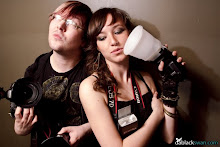
I work as a nightlife photographer, I also do photography and layout for NEIU Independent newspapers.
I am a member of NEIU's Adventure club, and for all of you who do not know what it is, I highly recommend that you do find out more about it, because it is so much fun.
As for the sports, I used to play softball for Serbian National Team, but we were pretty bad, so I didn't continue with softball when I came here.
The last but not the least, I started blogging about five years ago. It was my online diary, and in those times not many people in Serbia had internet so it was safe for me because I never thought anyone could find it and read it. And then it happened. So I stopped writing blog, buy my photo stayed as my avatar. Please don't judge me, I will change it as soon as I find another one more appropriate for class :)
Leaving home, my friends and family on the other side of the ocean was the most difficult thing I have ever done, but thanks to Internet and Facebook sometimes I feel that I am still there :)
I have two big passions, and those are photography and traveling. I know that it is silly to say that my dream is to travel the world, but so far I have done as much as I can to slowly make that dream come true.
I work as a nightlife photographer, I also do photography and layout for NEIU Independent newspapers.
I am a member of NEIU's Adventure club, and for all of you who do not know what it is, I highly recommend that you do find out more about it, because it is so much fun.
As for the sports, I used to play softball for Serbian National Team, but we were pretty bad, so I didn't continue with softball when I came here.
The last but not the least, I started blogging about five years ago. It was my online diary, and in those times not many people in Serbia had internet so it was safe for me because I never thought anyone could find it and read it. And then it happened. So I stopped writing blog, buy my photo stayed as my avatar. Please don't judge me, I will change it as soon as I find another one more appropriate for class :)
Subscribe to:
Posts (Atom)